Source eco friendly rubber bumper plates for Home Gymnasium Park
Source eco friendly rubber bumper plates from 30 verified suppliers in China. Compare models with varying weights, hole diameters, and customization options for strength training in home, gymnasium, and park settings.
Key considerations
Products List




Comprehensive Sourcing Guide
Strategic Sourcing Guide for Eco-Friendly Rubber Bumper Plates
Understanding the Product Category and Core Specifications
When sourcing eco-friendly rubber bumper plates, buyers must first distinguish between general weight plates and those specifically engineered for Olympic-style lifting and high-impact training. The core product category typically involves rubber components designed to absorb shock, protect flooring, and ensure safety during heavy lifts. Based on available market data, these products are frequently categorized under "Weight Plate" types with specific applications in gymnasiums, community centers, parks, and home fitness environments. The primary material composition is a critical differentiator; while some listings specify "Rubber," others explicitly denote "Natural Rubber," which aligns more closely with eco-friendly procurement goals.
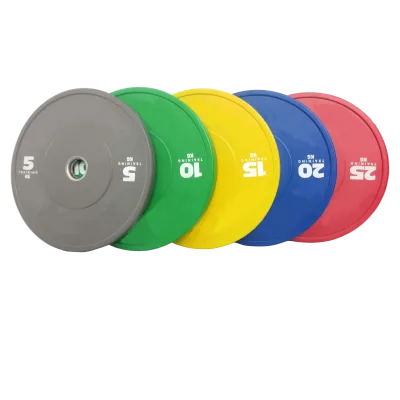
Technical specifications for these plates vary significantly across manufacturers. A key observation in the current market is the diversity in standard weight increments. Buyers should expect to find products adhering to standard metric and imperial configurations, such as 5, 10, 15, 20, and 25 kilograms, alongside corresponding pound values like 10, 15, 25, 35, 45, and 55 lbs. Some suppliers may offer a broader range including 2.5 kg or 2.5 lb increments. The physical dimensions are equally critical for compatibility with standard Olympic bars. Observed specifications indicate a common outer diameter of 51mm for the central hole, though other hole diameters such as 26mm, 29mm, and 31mm may appear in specific regional or custom variants. The physical profile of the plate is often described as "unfolded" or solid, distinguishing it from collapsible or foldable equipment.
The manufacturing origin of these plates is predominantly located in China, with specific production hubs identified in Anhui, Nantong, and Hebei provinces. This geographic concentration suggests a mature supply chain for rubber fitness equipment in the region. When evaluating the product, buyers should note that the "eco-friendly" attribute is often linked to the material source and the manufacturing process, rather than a universal certification for every listed item. Therefore, verifying the specific material composition—whether it is pure natural rubber or a composite—is the first step in confirming the environmental profile of the purchase.
Compliance, Certification, and Safety Standards
In the B2B procurement of fitness equipment, compliance is not merely a formality but a prerequisite for market entry and liability protection. For rubber bumper plates, the regulatory landscape often requires adherence to international safety and environmental standards. High-confidence data indicates that many suppliers in this sector possess CE certification, which is essential for selling into the European market. Additionally, ISO certifications are frequently cited, with specific references to ISO standards for quality management. While some background data mentions RoHS and REACH, these should be treated as potential attributes rather than guaranteed inclusions for every product unless explicitly confirmed in the supplier's documentation.
A critical area of verification is the adherence to specific industry standards for weight accuracy and durability. The International Weightlifting Federation (IWF) standards are a benchmark for high-performance equipment. Some product listings explicitly reference compliance with IWF standards, which ensures that the plates meet rigorous requirements for weight tolerance and dimensional consistency. For general commercial or home use, other standards may apply, such as those defining weight tolerances of +/- 20g for specific increments. Buyers must verify if the supplier claims compliance with such specific tolerances, as this directly impacts the usability of the equipment in competitive or precise training environments.
Warranty provisions also serve as an indicator of compliance confidence. Some suppliers offer "All Life" warranties, suggesting a high degree of confidence in the material's longevity and resistance to degradation. This contrasts with standard limited warranties and implies a commitment to quality that often correlates with higher-grade materials. However, buyers should treat such claims as observations of specific supplier policies rather than universal industry norms. The presence of a "New" condition status is standard, but the underlying quality assurance processes—such as factory audits or third-party testing—must be requested directly from the manufacturer to ensure that the eco-friendly claims are substantiated by actual production practices.
Cost Drivers and Pricing Dynamics
The pricing structure for rubber bumper plates is influenced by a complex interplay of material costs, manufacturing complexity, and order volume. The observed market price range for these products spans from $0.20 to $4.80 USD per unit. This wide variance is not indicative of quality differences alone but is heavily driven by the weight of the individual plate, the specific material composition (e.g., natural rubber vs. recycled blends), and the level of customization required. Heavier plates naturally command higher prices due to the increased volume of raw material required.
Minimum Order Quantity (MOQ) is another significant cost driver. The market data shows an MOQ range from 30 to 3,000 units. Lower MOQs, such as 30 units, may be available for standard, off-the-shelf items, but they often come with a higher per-unit cost. Conversely, larger orders, such as those starting at 1,000 lbs or 3,000 units, typically unlock economies of scale, reducing the unit price. Buyers must balance their inventory needs against the cash flow implications of high MOQs. For instance, a supplier requiring an MOQ of 1,000 lbs may be more suitable for large gym chains, while a supplier with a 30-unit MOQ might be better for boutique studios or initial market testing.
Customization is a primary factor that can escalate costs. Options such as adding a customized logo, selecting specific colors, or altering the hole diameter can increase the unit price and extend the lead time. The data indicates that sample times for customized logos can be as short as two days, while standard samples may take 3-7 days. However, the production lead time for bulk orders is generally within 30 days. Buyers should factor in these timeframes when planning their procurement cycles. Payment terms, typically T/T (Telegraphic Transfer) or Trade Assurance, also play a role in the financial dynamics, with Trade Assurance offering an additional layer of security for international transactions.
Typical Applications and Usage Scenarios
Rubber bumper plates are designed for a diverse range of applications, from high-intensity functional training to general strength conditioning. The primary application is identified as "Strength Training," making them ideal for Olympic weightlifting, powerlifting, and CrossFit-style workouts. The "eco-friendly" aspect of natural rubber makes these plates particularly suitable for environments where noise reduction and floor protection are paramount. The rubber material absorbs the impact of dropped weights, protecting both the flooring and the equipment, which is a critical feature for commercial gyms, community centers, and parks.
The versatility of these products is further evidenced by their suitability for various settings, including home gyms, gymnasiums, and community facilities. The "Unisex" and "Adult" designations indicate that these plates are intended for a broad demographic, accommodating users of different sizes and strength levels. The "Folded" attribute being "Unfolded" suggests that these are solid, non-collapsible plates, which is standard for bumper plates to ensure stability during lifts. The "Colorful" nature of the products allows for color-coding systems, which is a common practice in commercial gyms to help users quickly identify weight increments.
In terms of specific usage, the plates are engineered for "Weightlifting Exercise" and general "Training." The material properties of rubber provide a tactile grip and a stable base, reducing the risk of slippage during heavy lifts. The "Durable" feature highlighted in product attributes ensures that the plates can withstand repeated use and abuse, which is essential for high-traffic facilities. Whether used in a professional setting or a home environment, the core function remains the same: to provide a safe, effective, and environmentally conscious tool for resistance training.
Supplier Evaluation and Quality Control Protocols
Evaluating suppliers for rubber bumper plates requires a rigorous approach to verifying their manufacturing capabilities and quality control systems. Buyers should prioritize suppliers who explicitly state they are manufacturers rather than trading companies, as this often correlates with better control over material sourcing and production processes. The data indicates that several suppliers claim "Manufacturer: Yes" status, which is a positive indicator for direct engagement and potential cost savings.
Quality control should be a central component of the supplier evaluation process. Buyers must request documentation regarding weight tolerance, which can vary from standard industry tolerances to specific claims like +/- 20g. The consistency of the rubber compound is also vital; natural rubber offers superior elasticity and durability compared to synthetic blends, but it requires careful manufacturing to prevent degradation over time. Inspecting the packing methods is another quality indicator. Products are typically packed in polybags and cartons, or sometimes in wooden cases for heavier or more premium shipments. The use of pallets for shipping suggests a readiness for large-scale logistics.
When assessing eco-friendly claims, buyers should look for evidence of sustainable sourcing practices. While specific certifications like ISO 1998:2001 are mentioned in some contexts, buyers should verify the relevance of such standards to the specific product line. The presence of CE and ISO certifications is a baseline requirement, but the actual environmental impact of the production process should be discussed directly with the supplier. Questions regarding the source of the rubber, the use of recycled materials, and the disposal of production waste are essential for a truly eco-friendly procurement strategy.
Long-Term Procurement and Relationship Management
Successful long-term procurement of rubber bumper plates depends on establishing a sustainable relationship with suppliers that aligns with the buyer's operational goals. The delivery time of within 30 days is a standard benchmark, but buyers should negotiate specific timelines based on order volume and customization requirements. For customized orders, the lead time may extend slightly, and the sample time of 2 days for logos should be factored into the overall project schedule.
Payment terms such as T/T or Trade Assurance provide a framework for secure transactions. Trade Assurance, in particular, offers protection against non-delivery or quality discrepancies, which is valuable for new supplier relationships. Buyers should also consider the scalability of the supplier. As the buyer's business grows, the ability of the supplier to increase production capacity without compromising quality is crucial. The wide range of MOQs (30 to 3,000 units) suggests that many suppliers are flexible enough to accommodate both small startups and large enterprise clients.
Finally, the long-term value of eco-friendly rubber bumper plates lies in their durability and the brand reputation they confer. By sourcing high-quality, natural rubber products, buyers can offer their customers equipment that lasts longer and aligns with sustainability values. This can lead to increased customer loyalty and a competitive advantage in the fitness market. Regular quality audits and open communication channels with the supplier will ensure that the procurement process remains efficient and that the products continue to meet the evolving needs of the fitness industry.
FAQs
What certifications do eco friendly rubber bumper plates typically have?
These plates typically hold CE and ISO certifications for safety and quality compliance. Some listings also reference RoHS compliance, though this is less consistently documented across all suppliers. Buyers should verify specific certification documents before purchase.
Which weight standards are available for these rubber plates?
Standard weight increments include 5, 10, 15, 20, and 25 kilograms, along with corresponding pound values. Some manufacturers offer broader ranges including 2.5 kg or 2.5 lb options. Specific models may also adhere to IWF standards for competitive weightlifting.
Can buyers request a customized logo on these plates?
Yes, customized logos are available for most eco friendly rubber bumper plates. Sample times for logo customization can be as short as two days, while standard samples take three to seven days. Bulk production lead times generally remain within thirty days.
What is the typical price range for these rubber bumper plates?
The observed market price range spans from 0.20 to 4.80 USD per unit. This variance depends heavily on the weight of the plate, material composition, and order volume. Higher quantities often unlock better per-unit pricing due to economies of scale.
How does the minimum order quantity affect purchasing these plates?
Minimum order quantities range from 30 to 3000 units depending on the supplier and customization needs. Lower MOQs like 30 units suit small studios, while larger orders starting at 1000 lbs are better for bulk procurement. Customization often requires higher minimums.
Where are these rubber bumper plates primarily manufactured?
Manufacturing origins are concentrated in China, specifically in Anhui, Nantong, and Hebei provinces. These regions host a mature supply chain for rubber fitness equipment. Buyers should confirm the specific factory location to ensure logistics alignment.
What material is used to make these eco friendly plates?
The primary material is rubber, with some listings specifying natural rubber for enhanced eco-friendly properties. This material absorbs shock and protects flooring during heavy lifts. Buyers should verify if the rubber is pure natural or a composite blend.
What is the warranty period for these rubber bumper plates?
Some suppliers offer an all-life warranty, indicating high confidence in material longevity. This contrasts with standard limited warranties and suggests superior durability. Buyers should treat this as a specific supplier policy rather than a universal industry norm.